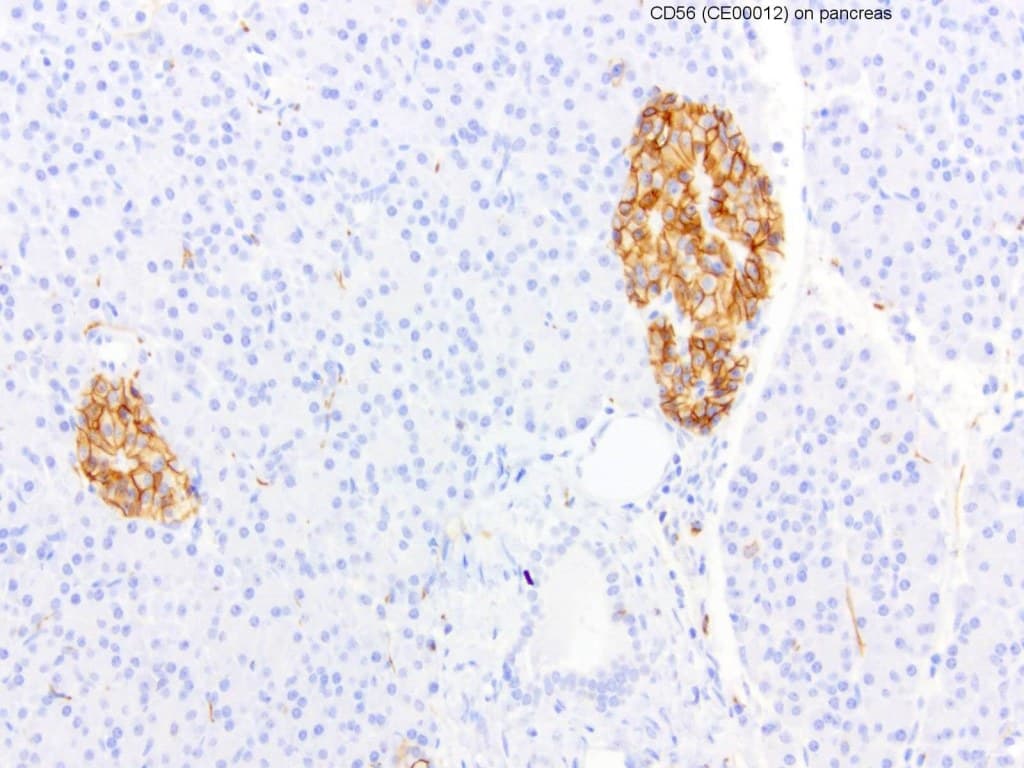

Anti CD56 (neural cell adhesion molecule, NCAM) CE/IVD immunohistochemistry (IHC) antibodies enable reliable detection of CD56 in formalin fixed, paraffin embedded (FFPE) tissues, supporting accurate immunophenotyping in hematopathology. CD56 is a transmembrane glycoprotein of the immunoglobulin superfamily, with multiple isoforms (NCAM 120, NCAM 140, NCAM 180) differing in intracellular domain length and tissue distribution. It is predominantly expressed on natural killer (NK) cells and subsets of T lymphocytes, with expression also observed in select neoplastic cells.
Biological Significance
- Cell adhesion and signaling: CD56 mediates homophilic and heterophilic interactions that regulate cell adhesion, migration, and intracellular signaling, relevant to both neural and hematopoietic biology.
- Immune system expression: High expression on NK cells and certain activated T cells reflects cytotoxic and immunosurveillance functions.
Diagnostic Utility in Hematopathology
- NK cell lymphomas and related neoplasms: CD56 IHC is a defining marker for accurate classification.
- Plasma cell disorders: Aberrant CD56 expression in multiple myeloma assists in confirming clonal plasma cell proliferation and may correlate with clinical or prognostic features.
- Leukemia subtyping: Observed in specific acute myeloid leukemia subtypes, aiding in subclassification when used alongside morphology and other immunophenotypic markers.
Key Features of CE/IVD Grade Anti CD56 Antibodies
- Clinical validation: Optimized for regulated diagnostic workflows in FFPE hematopathology specimens.
- High specificity: Monoclonal antibodies ensure reproducible detection with minimal cross reactivity.
- Automated platform compatibility: Suitable for standardized protocols on automated IHC systems.
- Panel integration: Complements broader immunophenotyping panels to enhance diagnostic accuracy.