Rabbit Anti-C3orf38 Polyclonal Antibody

Cat# HPA034737-25ul

Size : 25ul

Brand : Atlas Antibodies

Contact local distributor :


Phone : +1 850 650 7790

HPA034737
chromosome 3 open reading frame 38

Anti-C3orf38 Antibody

Polyclonal Antibody against HUMAN C3orf38

0.1 mg/ml
info@quimigen.pt

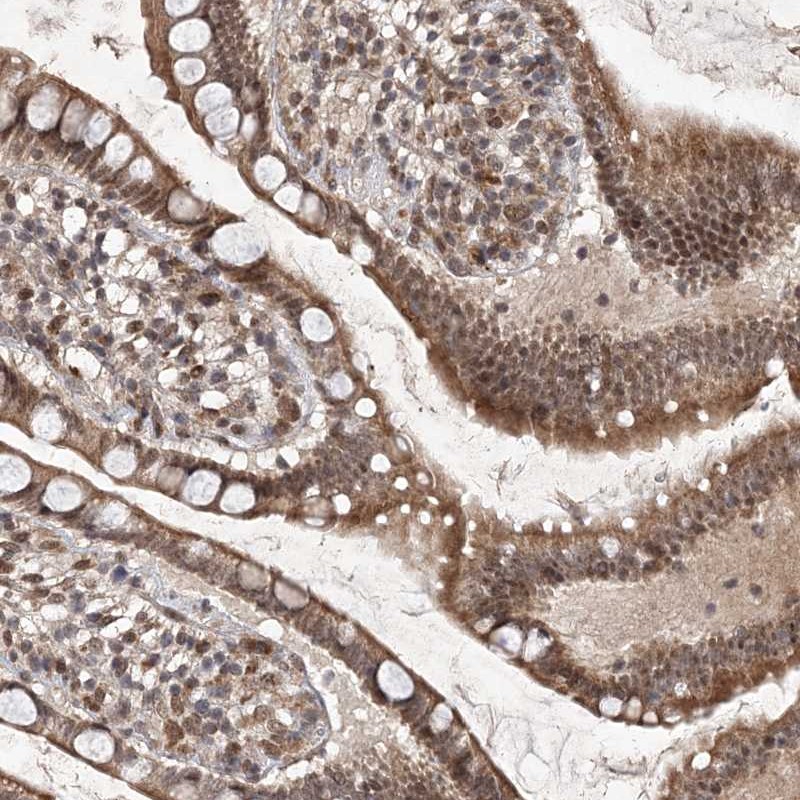
Immunohistochemical staining of human small intestine shows moderate cytoplasmic and nuclear positivity in glandular cells.

Product details

  • Target protein: chromosome 3 open reading frame 38
  • Target gene: C3orf38
  • Verified species reactivity: Human, Mouse, Rat
  • Interspecies information: Highest antigen sequence indentity to the following orthologs: MOUSE - ENSMUSG00000059920 (83%)RAT - ENSRNOG00000000720 (83%)
  • Clonality: Polyclonal
  • Isotype: IgG
  • Host: Rabbit
  • Buffer: 40% glycerol and PBS (pH 7.2). 0.02% sodium azide is added as preservative.
    Material Safety Data Sheet
  • Purification method: Affinity purified using the PrEST antigen as affinity ligand
  • Antigen sequence: Recombinant Protein Epitope Signature Tag (PrEST) antigen sequence
  • Notes: Gently mix before use. Optimal concentrations and conditions for each application should be determined by the user.

Current lot

  • Unit size: 100µl
  • Current lot: R32826
  • Concentration: 0.1 mg/ml

Applications

  • Immunohistochemistry (IHC) recommended conditions
    • Dilution: 1:20 - 1:50
    • Retrieval method: HIER pH6
  • Western Blot (WB) recommended conditions
    • Working concentration: 0.04-0.4 µg/ml

Validation

  • Immunohistochemistry (IHC) 
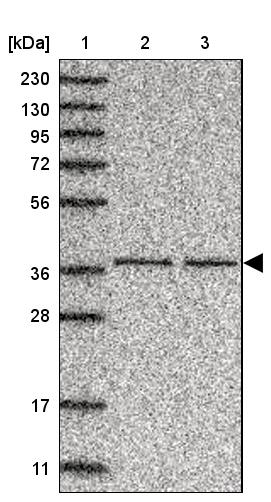
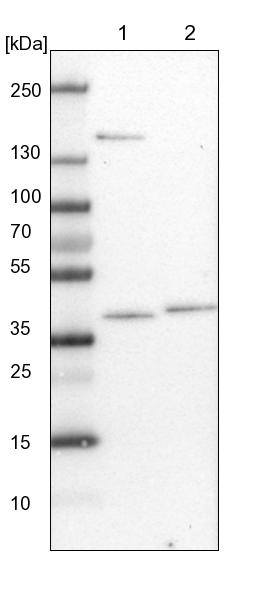
  • Western Blot (WB)Validated in Western blot using relevant lysates (see Western blot application images above) 

Target information

  • Protein name: chromosome 3 open reading frame 38
  • Gene name: C3orf38
  • Alternative gene names: MGC26717, 
  • Ensembl: 
  • Entrez: 
  • UniProt: 

Shipping and storage

  • Shipping: Normally shipped at ambient temperatureStorage: Store at +4°C for short term storage. Long time storage is recommended at -20°C.

References (1)

  • This antibody has been used for staining of 44 normal human tissue samples as well as human cancer samples covering the 20 most common cancer types and up to 12 patients for each cancer type. The results are part of an ongoing effort to map the human proteome using antibodies.
    Human Protein Atlas