ANGPT1 ELISA Kit (Dog)

Cat# OKCD02363
Size : 96Wells
Brand : Aviva Systems Biology
Contact local distributor :

Phone : +1 850 650 7790
ANGPT1 ELISA Kit (Dog) (OKCD02363)
| Datasheets/Manuals | Printable datasheet for ANGPT1 ELISA Kit (Dog) (OKCD02363) |
|---|
| Predicted Species Reactivity | Canis lupus|Dog | ||||||||||||||||||||||
|---|---|---|---|---|---|---|---|---|---|---|---|---|---|---|---|---|---|---|---|---|---|---|---|
| Application | ELISA-Sandwich | ||||||||||||||||||||||
| ELISA Kit Detection Method | Colorimetric | ||||||||||||||||||||||
| ELISA Kit Duration | 3h | ||||||||||||||||||||||
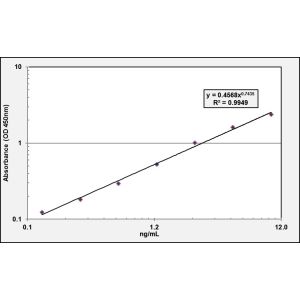
| ELISA Kit Linearity |
| ||||||||||||||||||||||
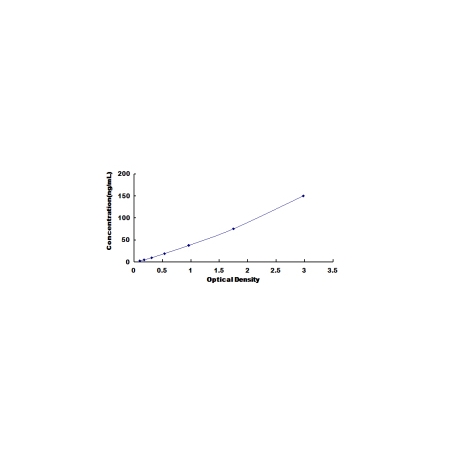
| ELISA Kit Principle | The test principle applied in this kit is Sandwich enzyme immunoassay. The microtiter plate provided in this kit has been pre-coated with an antibody specific to Angiopoietin 1 (ANGPT1). Standards or samples are then added to the appropriate microtiter plate wells with a biotin-conjugated antibody specific to Angiopoietin 1 (ANGPT1). Next, Avidin conjugated to Horseradish Peroxidase (HRP) is added to each microplate well and incubated. After TMB substrate solution is added, only those wells that contain Angiopoietin 1 (ANGPT1), biotin-conjugated antibody and enzyme-conjugated Avidin will exhibit a change in color. The enzyme-substrate reaction is terminated by the addition of sulphuric acid solution and the color change is measured spectrophotometrically at a wavelength of 450nm +/- 10nm. The concentration of Angiopoietin 1 (ANGPT1) in the samples is then determined by comparing the O.D. of the samples to the standard curve. | ||||||||||||||||||||||
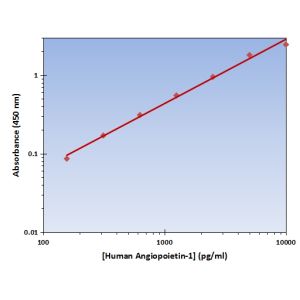
| ELISA Kit Range | 1.56-100ng/mL | ||||||||||||||||||||||
| ELISA Kit Recovery |
| ||||||||||||||||||||||
| ELISA Kit Reproducibility | Intra-assay Precision (Precision within an assay): 3 samples with low, middle and high level Angiopoietin 1 (ANGPT1) were tested 20 times on one plate, respectively. Inter-assay Precision (Precision between assays): 3 samples with low, middle and high level Angiopoietin 1 (ANGPT1) were tested on 3 different plates, 8 replicates in each plate. CV(%) = SD/meanX100 Intra-Assay: CV<10% Inter-Assay: CV<12% | ||||||||||||||||||||||
| ELISA Kit Component |
| ||||||||||||||||||||||
| Reconstitution and Storage | 2°C to 8°C|-20°C | ||||||||||||||||||||||
| Sample Type | Serum, plasma and other biological fluids | ||||||||||||||||||||||
| Sensitivity | 0.93 ng/mL | ||||||||||||||||||||||
| Specificity | This assay has high sensitivity and excellent specificity for detection of Angiopoietin 1 (ANGPT1). No significant cross-reactivity or interference between Angiopoietin 1 (ANGPT1) and analogues was observed. | ||||||||||||||||||||||
| Assay Info | Assay Methodology: Quantitative Sandwich ELISA | ||||||||||||||||||||||
| Protocol Information |
|
| Gene Symbol | ANGPT1 |
|---|---|
| Gene Full Name | angiopoietin 1 |
| Alias Symbols | ANG1;ANG-1;angiopoietin-1. |
| NCBI Gene Id | 403656 |
| Protein Name | Angiopoietin-1 |
| Description of Target | Binds and activates TIE2 receptor by inducing its tyrosine phosphorylation. Implicated in endothelial developmental processes later and distinct from that of VEGF. Appears to play a crucial role in mediating reciprocal interactions between the endothelium and surrounding matrix and mesenchyme. Mediates blood vessel maturation/stability. It may play an important role in the heart early development (By similarity). |
| Uniprot ID | Q60FC1 |
| Protein Accession # | NP_001005754.1 |
| Nucleotide Accession # | NM_001005754.2 |
| Protein Size (# AA) | 497 |