

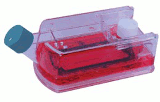
Plastic bioreactors, also known as single-use or disposable bioreactors, have fundamentally transformed biopharmaceutical manufacturing and cell culture research over the past two decades. Unlike traditional stainless-steel and glass bioreactors, which require extensive cleaning, sterilization, and validation between batches, plastic bioreactors employ pre-sterilized polymer vessels that are discarded after a single production campaign. This paradigm shift addresses a critical bottleneck in bioprocessing: the substantial infrastructure and operational costs associated with reusable systems. More than 90% of biopharmaceutical manufacturing facilities now utilize some form of single-use component, with over 70% employing single-use bioreactor bags. Plastic bioreactors are available in working volumes ranging from small-scale benchtop systems of a few milliliters to production-scale vessels exceeding 2,000 liters.
Polymer Materials and Selection Criteria
The selection of polymer materials for bioreactor construction is governed by stringent requirements for biocompatibility, chemical inertness, mechanical durability, and sterilization compatibility. The most commonly employed polymers include polyethylene (PE), polystyrene (PS), polypropylene (PP), polytetrafluoroethylene (PTFE), and polycarbonate (PC). These materials must conform to United States Pharmacopeia (USP) Class VI requirements, ensuring they are non-toxic, non-pyrogenic, and suitable for direct contact with biological materials.
Rigid bioreactor vessels are typically manufactured from polycarbonate or polystyrene, offering structural integrity and optical clarity for microscopic observation. Flexible bioreactor bags, by contrast, are constructed from multilayer polymer films incorporating low-density polyethylene (LDPE), ethylene/vinyl acetate copolymer, and other barrier materials. These multilayer films are engineered to provide specific gas permeability characteristics, mechanical strength, and weldability. Emerging materials include polylactic acid (PLA), a biodegradable polyester derived from renewable resources, which has been successfully employed in 3D-printed bioreactor vessels with integrated spargers.
