


Recombinant SARS-CoV-2 Spike Protein, S1 Subunit, Host Cell Receptor Binding Domain (RBD) derived from E.coli
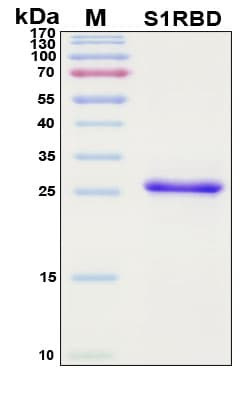
Recombinant SARS-CoV-2 Spike Protein, S1 Subunit, Host Cell Receptor Binding Domain (RBD), Antigen Grade
Recombinant SARS-CoV-2 Spike Protein, S1 Subunit, Host Cell Receptor Binding Domain (RBD), Antigen Grade
Contact Us for Bulk Request
Product Description
Specifications
| Size | 100 µg, 500 µg, 1000 µg |
| Species | SARS-CoV-2 |
| Accession Number | QHD43416 |
| Protein Name / Synonyms | SARS-CoV-2 Spike Protein, S1 Subunit, S protein, spike protein |
| Expressed Region | Arg319 - Phe541 |
| Expression System | E. coli |
| Tag | N-terminal histidine tag |
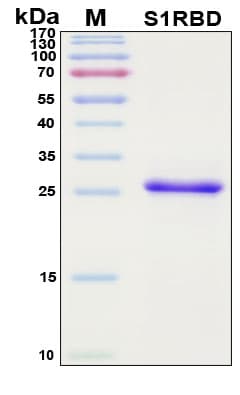
| Purity | >95 % |
| Purity Determined By | SDS-PAGE under reducing conditions and visualized by Coomassie blue staining |
| Molecular Weight (kDa) | ∼25 kDa |
| Format | Liquid |
| Formulation | Filtered solution in 50 mM Na2HPO4 (pH 7.4), 0.5 M NaCl, 450 mM imidazole, 6 M urea. |
| Concentration (lot specific) | Lot specific (see the label on the vial), determined by Bradford protein assay. |
| Research Area | Infectious Disease, COVID-19 |
| Shipping Type | Blue ice |
| Storage | -20°C |
Related Products
Recombinant SARS-CoV-2 Spike Protein, S1 Subunit
$256.00
Recombinant SARS-CoV-2 Spike Protein, S2 Subunit
As low as $256.00
Recombinant SARS-CoV-2 Nucleocapsid Protein
As low as $256.00
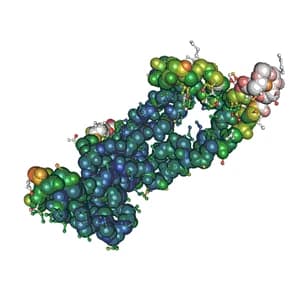
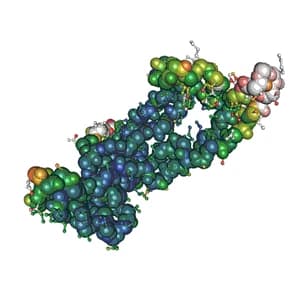
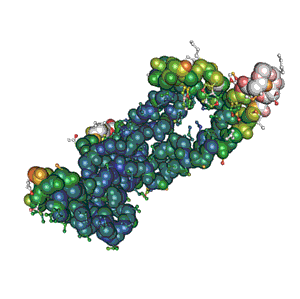
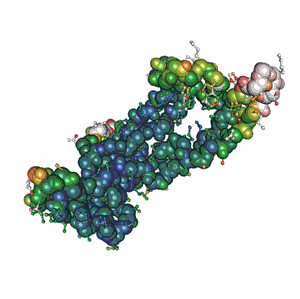
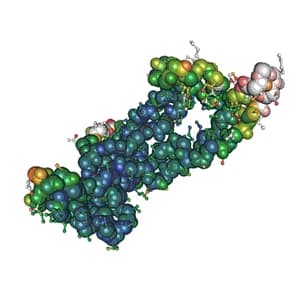
Introduction
SARS-CoV-2 enters human cells by engaging the ACE2 receptor through the receptor-binding domain (RBD) in its spike protein. This RBD, located within the S1 subunit, is responsible for the initial viral attachment and is a major target for neutralizing antibodies and vaccine strategies. Blocking this interaction is a key approach in antiviral drug development.
Reference: https://link.springer.com/chapter/10.1007/978-3-031-46545-1_13
SDS-PAGE Image
Storage/Stability
Upon arrival, the protein may be stored for 2 weeks at 4°C. For long term storage, it is recommended to store at -20°C or -80°C in appropriate aliquots. Avoid repeated freeze-thaw cycles.
Disclaimer
"Antigen Grade" is not a formally regulated industry standard, but it is commonly used to indicate that a protein is intended for antigen-based applications rather than functional assays.
Antigen Grade proteins are recombinant proteins purified under denaturing conditions (e.g., in urea) and may not retain their native conformation or biological activity. These proteins are suitable for antigen-based applications such as antibody generation, ELISA plate coating, Western blotting, and other immunological assays, but are not recommended for functional or activity assays.
Suitable Applications:
✔ Antibody production (immunogen)✔ ELISA coating antigen
✔ Western blot positive control
✔ Dot blot
✔ Epitope mapping
✔ Antibody screening, etc.
Not Recommended:
✘ Enzyme activity assays✘ Ligand-receptor binding assays (unless validated)
✘ Cell-based functional assays
✘ SPR/BLI kinetic studies requiring native folding
Why "Antigen Grade"?
Many bacterial proteins expressed as inclusion bodies are purified in 6–8 M urea. Although they can often be refolded, proteins sold in urea are generally not guaranteed to be correctly refolded or biologically active. "Antigen Grade" proteins are suitable for immunological applications but may not be appropriate for assays requiring native protein function.
citations
Physicochemical Nature of SARS-CoV-2 Spike Protein Binding to Human Vimentin
- Year:
- 2023
- Journal Name:
- Acs Applied Materials & Interfaces
An ultra-sensitive electrochemical biosensor using the Spike protein for capturing antibodies against SARS-CoV-2 in point-of-care
- Year:
- 2022
- Journal Name:
- Materials Today Bio
Simultaneous Detection of SARS-CoV-2 Nucleoprotein and Receptor Binding Domain by a Multi-Area Reflectance Spectroscopy Sensor
- Year:
- 2023
- Journal Name:
- Biosensors-Basel
Overcoming antibody-resistant SARS-CoV-2 variants with bispecific antibodies constructed using non-neutralizing antibodies
- Species:
- Mouse
- Sample Type:
- Other / Unspecified (immunogen for BALB, c mice hybridoma production)
- Year:
- 2024
- Journal Name:
- iScience
- PubMed ID:
- 38500835
Direct activation of the alternative complement pathway by SARS-CoV-2 spike protein is blocked by factor D inhibition.Blood
- Year:
- 2020
- PubMed ID:
- 32877502
SARS-CoV-2 Spike Protein (RBD) Subunit Adsorption at Abiotic Surfaces and Corona Formation at Polymer Particles
- Year:
- 2022
- Journal Name:
- International Journal of Molecular Sciences
SARS-CoV-2 Spike Protein Mutation at Cysteine-488 Impairs Its Golgi Localization and Intracellular S1/S2 Processing
- Year:
- 2022
- Journal Name:
- International Journal of Molecular Sciences
ACE2-IgG1 fusions with improved in vitro and in vivo activity against SARS-CoV-2
- Year:
- 2022
- Journal Name:
- iScience
- PubMed ID:
- 34957381
Effects of spike proteins on angiotensin converting enzyme 2 (ACE2)
- Year:
- 2023
- Journal Name:
- Archives of Biochemistry and Biophysics
Thermal analysis of protein stability and ligand binding in complex media
- Year:
- 2022
- Journal Name:
- Thermochimica Acta