

Recombinant Rat Prolactin (Prl) - E.coli

Referência CSB-EP018724RA-1mg
Tamanho : 1mg
Marca : Cusabio
Contactar o distribuidor local :

Telefone : +1 850 650 7790
| Abbreviation | Recombinant Rat Prl protein |
| MSDS | |
| Image | |
Product Details
Purity
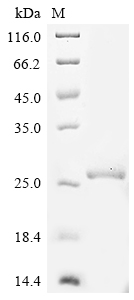
≥ 90% as determined by SDS-PAGE.
Target Names
Uniprot No.
Research Area
Signal Transduction
Species
Rattus norvegicus (Rat)
Source
E.coli
Expression Region
30-226AA
Target Protein Sequence
LPVCSGGDCQTPLPELFDRVVMLSHYIHTLYTDMFIEFDKQYVQDREFIAKAINDCPTSSLATPEDKEQAQKVPPEVLLNLILSLVHSWNDPLFQLITGLGGIHEAPDAIISRAKEIEEQNKRLLEGIEKIISQAYPEAKGNEIYLVWSQLPSLQGVDEESKDLAFYNNIRCLRRDSHKVDNYLKFLRCQIVHKNNC
Note: The complete sequence may include tag sequence, target protein sequence, linker sequence and extra sequence that is translated with the protein sequence for the purpose(s) of secretion, stability, solubility, etc.
If the exact amino acid sequence of this recombinant protein is critical to your application, please explicitly request the full and complete sequence of this protein before ordering.
Note: The complete sequence may include tag sequence, target protein sequence, linker sequence and extra sequence that is translated with the protein sequence for the purpose(s) of secretion, stability, solubility, etc.
If the exact amino acid sequence of this recombinant protein is critical to your application, please explicitly request the full and complete sequence of this protein before ordering.
Mol. Weight
26.6 kDa
Protein Length
Full Length of Mature Protein
Tag Info
N-terminal 6xHis-tagged
Form
Liquid or Lyophilized powder
Note: We will preferentially ship the format that we have in stock, however, if you have any special requirement for the format, please remark your requirement when placing the order, we will prepare according to your demand.
Note: We will preferentially ship the format that we have in stock, however, if you have any special requirement for the format, please remark your requirement when placing the order, we will prepare according to your demand.
Buffer
If the delivery form is liquid, the default storage buffer is Tris/PBS-based buffer, 5%-50% glycerol. If the delivery form is lyophilized powder, the buffer before lyophilization is Tris/PBS-based buffer, 6% Trehalose.
Reconstitution
We recommend briefly centrifuging the vial prior to opening to bring the contents to the bottom. Reconstitute the lyophilized protein in sterile deionized water to a recommended concentration of 0.1–1.0 mg/mL. If used immediately after reconstitution, glycerol is not required. If not for immediate use, after the protein is completely dissolved, add glycerol to a final concentration of 5%–50% (default: 50%), aliquot as needed, and store at -20℃/-80℃ for long-term storage. If dilution is needed during subsequent use, dilute with the same buffer as the protein, but without stabilizers (e.g., glycerol, trehalose, etc).
Troubleshooting and FAQs
Storage Condition
Store at -20°C/-80°C upon receipt, aliquoting is necessary for mutiple use. Avoid repeated freeze-thaw cycles.
Shelf Life
The shelf life is related to many factors, storage state, buffer ingredients, storage temperature and the stability of the protein itself.
Generally, the shelf life of liquid form is 6 months at -20°C/-80°C. The shelf life of lyophilized form is 12 months at -20°C/-80°C.
Generally, the shelf life of liquid form is 6 months at -20°C/-80°C. The shelf life of lyophilized form is 12 months at -20°C/-80°C.
Notes
Repeated freezing and thawing is not recommended. Store working aliquots at 4°C for up to one week.
Datasheet & COA
Please contact us to get it.
Description
Synthesizing recombinant rat Prolactin (Prl) in E. coli involves co-inserting the target gene into an expression vector with an N-terminal 6xHis-tag gene, transforming it into E. coli cells, and growing the cells to induce protein expression. The target gene encodes the 30-226aa of the rat Prl. After cell lysis, the rat Prl protein is purified using affinity chromatography. Its purity is evaluated with SDS-PAGE, exceeding 90%. Rat Prl is a hormone that plays a crucial role in various physiological processes in rats. Research has shown that regulating Prl secretion is complex and varies with...
Customer Reviews and Q&A
■ Customer Reviews
There are currently no reviews for this product.
Target Background
Function
Prolactin acts primarily on the mammary gland by promoting lactation.
Gene References into Functions
- It was examined whether prolactin modulation alters ventral prostate (VP) morphophysiology in adult castrated rats.
- Data suggest that prolactin and oleic acid synergistically stimulate beta-cell proliferation and islet growth; in cultured neonatal islets, prolactin increases cell proliferation 6-fold, oleic acid 3.5-fold, and their combination 15-fold. Similar results were observed in cultured adult islets.
- Involvement of prolactin in the regulation of bicarbonate biodynamics using female rat model of cholestasis of pregnancy.
- This study reports on the effect of copulation on potentially precancerous prostate lesions, serum testosterone and prolactin levels in rats.
- This study demonstrated that the Cultured neurons expressed mRNA for both PRL and its receptor (PRLR), and both PRL and PRLR expression levels changed after the excitotoxic insult.
- Data confirm that prolactin secretion by anterior pituitary gland can be down-regulated by environmental endocrine disruptors; here, perfluorooctane sulfonate affects periventricular-hypophysial dopaminergic neurons in mechanism involving estradiol.
- In conclusion, PRL was responsible for the lactation-induced mucosal adaptations, which were associated with compensatory increase in FGF-23 expression probably to prevent calcium hyperabsorption.
- PRL is unchanged in a rat model of panic evoked by dorsal periaqueductal gray stimulation.
- Prolactin actively supports lactation providing amino acids to the gland through SNAT2 for the synthesis of milk proteins.
- Results showed that an active sexual life, with constant execution of sexual behavior, produces a sustained increase in serum PRL, prostate PRL receptors, and the pStat3 signaling pathway
- This study showe that TGF-beta and TNF-alpha antagonize the effect of each other on the expression and release of prolactin in a cell line and in obese and diabetic rats.
- supraphysiological levels of PRL affect carcinogenesis. PL induces regression of the tumors due to the differentiation produced on the mammary cells.
- Prolactin induces apoptosis of lactotropes
- High Prolactin expression is associated with Streptozotocin diabetes.
- insulin activates prolactin gene transcription by activating Elk-1 that recruits the NuA4 complex to the promoter.
- PRL acts on ARC neurons to inhibit kisspeptin expression in female rats
- serum levels may be involved in the homing events to mammary glands, probably helping antibody-secreting cells and protecting the gland during lactation development
- Prolactin inhibits apoptosis in chondrocytes in response to a mixture of proinflammatory cytokines.
- Our data confirmed the regulatory role of dopamine, serotonin, and TRH on PRL secretion, however, the interaction between these and glutamatergic systems was not confirmed.
- Data from 2 hepatic insufficiency models suggest that pituitary expression of Prl and estrogen receptor alpha is up-regulated in this state, positively correlating with increase in serum 17beta-estradiol level; data show gastro-hepato-pituitary axis.
- The results indicate that under prolonged duration of a daily melatonin signal, rat anterior pituitary prolactin synthesis and release are depressed, together with significant changes in the redox and circadian mechanisms controlling them.
- results show that the effect of centrally injected allopreganolone over reproductive function could be due to a centrally originated LH mediated effect over ovarian function that affects luteal regression, through the inhibition of apoptosis and stimulation of progesterone and prolactin release
- Lactotroph nonselective cation channels, presumably belonging to the TRPC family, contribute to the background depolarizing conductance and firing of action potentials with consequent prolactin release.
- Data suggest that the resolution of an inflammatory response is associated with dramatic activation of the prolactin (PRL) gene promoter in the myeloid lineage.
- E(2) may act as a modulator of the prolactin secretory response induced by TRH through membrane estrogen receptors, with the contribution by PI3K/Akt pathway activation.
- The results show that PRL expression and cell proliferation are controlled in part by CEBPD.
- Gonadotrophs are the major source of Nrg1 in the normal anterior pituitary and Nrg1 may function as a paracrine/juxtacrine regulator of PRL secretion.
- Data suggest that prolactin is involved in regulation of prolactin receptor expression and maintenance of physiological cell renewal in anterior pituitary.
- Data suggest that inflammation leads to accumulation of endogenous prolactin in female and male rats, and that prolactin acts as an inflammatory mediator at different time points for female and intact male rats.
- Prolactin inhibition during late lactation programs renal function damage in adult offspring.
- Estradiol regulates dopamine-activataed GIRK channel activity in pituitary lactotrophs, regulating prolactin release during the estrous cycle.
- Integrity of the pelvic nerve is necessary for the systemic oxytocin induction of the PRL secretory rhythm in ovariectomized rats.
- NONO and SFPQ were functionally involved in circadian Prl transcription since overexpression of both proteins greatly reduced Prl promoter activity (P<0.001) and disrupted its circadian pattern.
- The anterior pituitary production of 16 kDa prolactin is variable along the estrous cycle and increased by estrogens.
- Complex interactions between Ahr and Esr alter Prl and luteinizing hormone (LH) synthesis by direct actions in lactotropes and gonadotropes.
- Results suggest that bone morphogenetic proteins elicit differential actions in the regulation of prolactin release dependent on cellular cAMP-PKA activity.
- PREB can function as a transcriptional regulator of PRL promoter activity and might be involved in TRH-induced PRL gene transcription
- Results suggest a role for dopamine in the generation of the oestrous prolactin surge.
- Prolactin diminishes the damaging actions of excitotoxicity in the kainate model of epilepsy.
- Data show that inactivation of tyrosine hydroxylase in hypothalamic neuroendocrine dopamine neurons is required for suckling-induced prolactin and ACTH responses.
- Results demonstrate clearly that certain circadian elements binding to the E-box133 site are required for episodes of PRL mRNA expression.
- Prolactin gene expression data suggest that pituitary tissue comprises a series of cell ensembles, which individually display a variety of patterns of short-term stochastic behaviour, but together yield long-range and long-term coordinated behaviour.
- results indicate that specific effects upon male rat lactotropes may be exerted by PRL variants released from anterior pituitary glands of lactating and non-lactating rats
- At 5 h after progesterone (P(4)) treatment, tyrosine hydroxylase activity and phosphorylation state declined coincident with an increase in plasma prolactin in both P(4)-treated morning and afternoon groups.
- PRL directly enhanced the transcellular and paracellular calcium transport in the rat cecum through the nongenomic signaling pathways involving PI3K, PKC, and ROCK.
- Review: evidence demonstrating PRL synthesis by different subtypes of immune cells from humans, mice and rats, describe the regulation of PRL gene expression in human lymphocytes, and discuss the functions of PRL made by immune cells.
- Review: Effects of prolactin on signal transduction and gene expression: possible relevance for systemic lupus erythematosus.
- Review: effects of changing the ratio of these two forms in maternal PRL on gamma delta T cell development in rat pups in utero
- physiological prolactin secretion response to stress depends on the renin--angiotensin system
- Inverse control of prolactin and growth hormone gene expression: effect of thyroliberin on transcription and RNA stabilization.
Subcellular Location
Secreted.
Protein Families
Somatotropin/prolactin family
Database Links
KEGG:
STRING:
UniGene: