

Recombinant Mouse Leptin (Lep) - E.coli

Referência CSB-EP012870MO-100ug
Tamanho : 100ug
Marca : Cusabio
Contactar o distribuidor local :

Telefone : +1 850 650 7790
| Abbreviation | Recombinant Mouse Lep protein |
| MSDS | |
| Image | |
Product Details
Purity
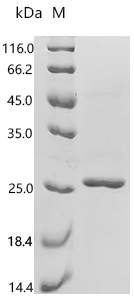
≥ 85% as determined by SDS-PAGE.
Activity
Not Test
Target Names
Uniprot No.
Research Area
Others
Alternative Names
Obesity factor
Species
Mus musculus (Mouse)
Source
E.coli
Expression Region
22-167aa
Target Protein Sequence
VPIQKVQDDTKTLIKTIVTRINDISHTQSVSAKQRVTGLDFIPGLHPILSLSKMDQTLAVYQQVLTSLPSQNVLQIANDLENLRDLLHLLAFSKSCSLPQTSGLQKPESLDGVLEASLYSTEVVALSRLQGSLQDILQQLDVSPEC
Note: The complete sequence may include tag sequence, target protein sequence, linker sequence and extra sequence that is translated with the protein sequence for the purpose(s) of secretion, stability, solubility, etc.
If the exact amino acid sequence of this recombinant protein is critical to your application, please explicitly request the full and complete sequence of this protein before ordering.
Mol. Weight
22.9 kDa
Protein Length
Full Length of Mature Protein
Tag Info
C-terminal 6xHis-tagged
Form
Liquid or Lyophilized powder
Note: We will preferentially ship the format that we have in stock, however, if you have any special requirement for the format, please remark your requirement when placing the order, we will prepare according to your demand.
Note: We will preferentially ship the format that we have in stock, however, if you have any special requirement for the format, please remark your requirement when placing the order, we will prepare according to your demand.
Buffer
If the delivery form is liquid, the default storage buffer is Tris/PBS-based buffer, 5%-50% glycerol. If the delivery form is lyophilized powder, the buffer before lyophilization is Tris/PBS-based buffer, 6% Trehalose.
Reconstitution
We recommend briefly centrifuging the vial prior to opening to bring the contents to the bottom. Reconstitute the lyophilized protein in sterile deionized water to a recommended concentration of 0.1–1.0 mg/mL. If used immediately after reconstitution, glycerol is not required. If not for immediate use, after the protein is completely dissolved, add glycerol to a final concentration of 5%–50% (default: 50%), aliquot as needed, and store at -20℃/-80℃ for long-term storage. If dilution is needed during subsequent use, dilute with the same buffer as the protein, but without stabilizers (e.g., glycerol, trehalose, etc).
Troubleshooting and FAQs
Storage Condition
Store at -20°C/-80°C upon receipt, aliquoting is necessary for mutiple use. Avoid repeated freeze-thaw cycles.
Shelf Life
The shelf life is related to many factors, storage state, buffer ingredients, storage temperature and the stability of the protein itself.
Generally, the shelf life of liquid form is 6 months at -20°C/-80°C. The shelf life of lyophilized form is 12 months at -20°C/-80°C.
Generally, the shelf life of liquid form is 6 months at -20°C/-80°C. The shelf life of lyophilized form is 12 months at -20°C/-80°C.
Notes
Repeated freezing and thawing is not recommended. Store working aliquots at 4°C for up to one week.
Datasheet & COA
Please contact us to get it.
Customer Reviews and Q&A
■ Customer Reviews
There are currently no reviews for this product.
Target Background
Function
Key player in the regulation of energy balance and body weight control. Once released into the circulation, has central and peripheral effects by binding LEPR, found in many tissues, which results in the activation of several major signaling pathways. In the hypothalamus, acts as an appetite-regulating factor that induces a decrease in food intake and an increase in energy consumption by inducing anorexinogenic factors and suppressing orexigenic neuropeptides, also regulates bone mass and secretion of hypothalamo-pituitary-adrenal hormones. In the periphery, increases basal metabolism,...
Gene References into Functions
- In C57bl/6 model, glycaemic index of maternal dietary carbohydrates differentially alters Fto and Lep expression in offspring.
- A potent, selective, and orally bioavailable inhibitor of the protein-tyrosine phosphatase PTP1B improves insulin and leptin signaling in animal models
- Catalase overexpression modulates metabolic parameters in a new 'stress-less' leptin-deficient mouse model.
- Since upregulation of ANGPTL6 is induced on metabolic stress, we investigated the hepatic expression of ANGPTL6 by leptin, a representative adipokine of obesity. Mice on a high-fat diet showed increased serum leptin levels and hepatic Angptl6 expression.
- This study shows that prolonged exposure to high-fat diets in adulthood is associated with a gradually increasing DNA methylation level at the Leptin and Pparg2 promoters in a depot-specific manner.
- the study reports a novel mechanistic pathway of leptin-mediated renal inflammation that is dependent on NOX-2-miR21 axis in ectopic manifestations underlying non-alcoholic fatty liver disease-induced co-morbidities
- These results demonstrated a novel molecular mechanism by which leptin sustained oligodendrocyte precursor cell proliferation and remyelination in a pathological central nervous system.
- These data demonstrate that FAAH activity is required for leptin's hypophagic effects
- These data uncouple the mechanisms conferring qualitative and quantitative expression of the leptin gene and further suggest that factor(s) that bind to LepRE1 quantitatively control leptin expression and might be components of a lipid-sensing system in adipocytes.
- These results indicate that leptin plays a role in nociception induced by acute inflammation
- results suggest that STAT transcriptional activity is downregulated by high levels of leptin, leading to reduced cAMP-dependent steroidogenic genes (Star and Cyp11a1) expressions in MA-10 Leydig cells.
- Data suggest that lnc-leptin is among the most prominent lncRNAs expressed in adipocytes; lnc-leptin expression from an enhancer region upstream of leptin is sensitive to insulin and correlates to leptin expression across diverse pathophysiological conditions; induction of lnc-leptin is essential for adipogenesis; its presence is required for maintenance of leptin expression in adipocytes. (lnc = long non-coding RNA)
- Data (including data from studies using mutant, transgenic, and knockout mice) suggest that gene targets of leptin/leptin-receptor (Lep/Lepr) signaling in hypothalamic neurons regulate energy metabolism; Lep/Lepr signaling appears to up-regulate expression of Atf3 (activating transcription factor-3) in hypothalamic neurons.
- Study shows that compared to the other mouse lines, db/db mice with dysfunctional leptin receptors had a significantly longer tail flick latency after saline and buprenorphine. The results provide novel support for the interpretation that acute thermal nociception is associated with altered leptin signaling.
- The studies established a potential link between leptin and adipocyte insulin responsiveness in an NOS2 dependent manner.
- leptin regulates the expression of osteocalcin in growth plate chondrocytes via the ERK1/2 signaling pathway, while there is no effect on the phosphorylation of either p38 or AKT
- Hyperleptinemia exacerbates high fat diet-mediated atrial fibrosis and atrial fibrillation.
- Taken together, these results suggest that leptin, in concert with other stimuli in the micro milieu, may contribute to the development of psoriasis.
- Thus, Mc4r in the PVH appears to be required for early-life programming of hypertension arising from either maternal obesity or neonatal hyperleptinemia. Early-life exposure of the PVH to maternal obesity through postnatal elevation of leptin may have long-term consequences for cardiovascular health.
- t the cellular level, leptin promoted effector T-cell responses and facilitated the presentation of self-antigens to T cells, whereas it inhibited the activity of regulatory CD4 T cells. The understanding of the role of leptin in modulating autoimmune responses in SLE can open possibilities of leptin-targeted therapeutic intervention in the disease.
- in congenitally leptin deficient animals, leptin is not required for compensatory reduction in energy expenditure accompanying weight loss, but suggest that the hyperphagia of the weight-reduced state is leptin-dependent.
- Our data provide evidence that the interplay of these two hormones could help improve the understanding of the pathogenesis of atherosclerosis and NAFLD.
- Data suggest that Htr2c and leptin in hypothalamic nuclei may be involved in the effects of corticosterone on food intake/appetite regulation. (Htr2c = 5-hydroxytryptamine type 2C receptor)
- Further experiments indicated that miR-122 inhibited leptin-induced liver fibrosis in leptin-deficient mouse model.
- Endoplasmic reticulum stress-induced CHOP activation in the brain is a mechanistic link in the palmitate-induced negative regulation of leptin and IGF1.
- neuronal Rap1 critically regulates leptin sensitivity
- Upregulation of leptin levels in both the vessel wall and the circulation after vessel injury promoted the migration of Sca-1(+) progenitor cells via leptin receptor-dependent signal transducer and activator of transcription 3- Rac1/Cdc42-ERK (extracellular signal-regulated kinase)-FAK pathways, which enhanced neointimal formation.
- Depletion of CLPABP disturbed the normal subcellular localization of HuR to stress granules, and overexpression of CLPABP induced instability of leptin mRNA by inhibiting HuR function.
- These results confirm and extend the previous evidence that LEP has a general and important role in the response of mammalian cells to irradiation.
- leptin is involved in the proliferation and activation of microglia, which in turn enhances the development of neuropathic pain after avulsion of the cervical roots.
- Suggest that intact endothelial leptin signaling limits neointima formation and that obesity represents a state of endothelial leptin resistance.
- these studies demonstrate marked differences in the acute insulin-independent effects by which leptin reverses fasting hyperglycemia and ketoacidosis in a rodent model of DKA versus the chronic pleotropic effects by which leptin reverses hyperglycemia in a non-DKA rodent model of T1D.
- High fat diet attenuates leptin signaling throughout the brain, but some brain regions maintain their ability to sense leptin. Weight loss restores leptin sensing to some degree in most (but not all) brain regions, while other brain regions display hypersensitivity to leptin following weight loss
- CNS-specific Tak1 deletion prevented ER-stress-induced hypothalamic leptin resistance and hyperphagic obesity under a high-fat diet (HFD). Thus, TAK1 is a crucial regulator of ER stress in vivo, which could be a target for alleviation of ER stress and its associated disease conditions.
- these data unmasked a role for mitochondrial fission in leptin sensitivity and glucose sensing of POMC neurons.
- Obesity and leptin deficiency substantially decreased morphine metabolism and clearance.
- These findings suggest that by impairing the testicular LEP-JAK-STAT pathway, early-stage obesity inhibits the biosynthesis of testosterone and sexual development and reduces male reproductive potential. Long-term moderate and high-volume exercise can effectively reduce body fat and improve obesity-induced abnormalities in testicular leptin signal transduction, whereas only moderate-volume exercise can reverse the negativ
- genetic and pharmacological ablation of adult NG2-glia (also known as oligodendrocyte precursors), but not microglia, leads to primary leptin resistance and obesity in mice.
- a novel mechanism of leptin-induced fatty acid oxidation in muscle tissue; namely, this process is dependent on the activation of AMPK to induce the translocation of FAT/CD36 to the plasma membrane, thereby stimulating fatty acid uptake.
- Results demonstrate that in white adipose tissue, leptin expression and secretion is promoted by Epac1, hence regulating energy balance and glucose homeostasis.
- may regulate growth hormone expression in somatotropes through the stimulation of POU1F1
- This study found that the expression of leptin and its receptor OB-R in mouse models of Sjogren's syndrome are elevated both locally and systemically during Sjogren's syndrome progression.
- obesity-associated elevation of leptin contributes to the increased susceptibility of asthma via modulation of pro-allergic lymphocyte responses.
- Leptin stimulation led to TNFalpha production under both in vitro and in vivo conditions, and diurnal fluctuation of leptin concentrations in the cerebrospinal fluid predicted the circadian changes of TNFalpha gene expression in the hypothalamus.
- geniposide may regulate tau phosphorylation through leptin signaling
- Activated FXR inhibits leptin signaling and counteracts tumor-promoting activities of cancer-associated fibroblasts in breast malignancy.
- this study shows that knockdown of leptin in hepatoma cells caused higher Treg activity and lower CD8+ T-cell response in the mouse hepatocellular carcinoma allograft model.
- Hexim1 selectively modulates leptin-mediated signal transduction pathways in the hypothalamus.
- The weight-reducing hypophagic effects of leptin are not augmented through its thermogenic effect.
- ime-specific changes in promoter associated DNA methyltransferases may be associated with the regulation of leptin expression.
Involvement in disease
Defects in Lep are the cause of profound obesity and type II diabetes.
Subcellular Location
Secreted.
Protein Families
Leptin family
Database Links
KEGG:
STRING:
UniGene: