

Recombinant Human Leptin (LEP), partial - E.coli

Referência CSB-RP067974h-20ug
Tamanho : 20ug
Marca : Cusabio
Contactar o distribuidor local :

Telefone : +1 850 650 7790
| Abbreviation | Recombinant Human LEP protein, partial |
| MSDS | |
| Image | |
Product Details
Purity
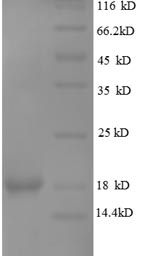
≥ 90% as determined by SDS-PAGE.
Target Names
Uniprot No.
Research Area
Signal Transduction
Alternative Names
FLJ94114; LEP; LEP_HUMAN; LEPD; Leptin (murine obesity homolog); Leptin (obesity homolog, mouse); Leptin; Leptin Murine Obesity Homolog; Leptin Precursor Obesity Factor; OB; Obese protein; Obese, mouse, homolog of; Obesity; Obesity factor; Obesity homolog mouse; Obesity Murine Homolog Leptin; OBS; OTTHUMP00000212285
Species
Homo sapiens (Human)
Source
E.coli
Expression Region
29-164aa
Target Protein Sequence
DDTKTLIKTIVTRINDISHTQSVSSKQKVTGLDFIPGLHPILTLSKMDQTLAVYQQILTSMPSRNVIQISNDLENLRDLLHVLAFSKSCHLPWASGLETLDSLGGVLEASGYSTEVVALSRLQGSLQDMLWQLDLS
Note: The complete sequence may include tag sequence, target protein sequence, linker sequence and extra sequence that is translated with the protein sequence for the purpose(s) of secretion, stability, solubility, etc.
If the exact amino acid sequence of this recombinant protein is critical to your application, please explicitly request the full and complete sequence of this protein before ordering.
Mol. Weight
19.0kDa
Protein Length
Partial
Tag Info
N-terminal 6xHis-tagged
Form
Liquid or Lyophilized powder
Note: We will preferentially ship the format that we have in stock, however, if you have any special requirement for the format, please remark your requirement when placing the order, we will prepare according to your demand.
Note: We will preferentially ship the format that we have in stock, however, if you have any special requirement for the format, please remark your requirement when placing the order, we will prepare according to your demand.
Buffer
If the delivery form is liquid, the default storage buffer is Tris/PBS-based buffer, 5%-50% glycerol. If the delivery form is lyophilized powder, the buffer before lyophilization is Tris/PBS-based buffer, 6% Trehalose.
Reconstitution
We recommend briefly centrifuging the vial prior to opening to bring the contents to the bottom. Reconstitute the lyophilized protein in sterile deionized water to a recommended concentration of 0.1–1.0 mg/mL. If used immediately after reconstitution, glycerol is not required. If not for immediate use, after the protein is completely dissolved, add glycerol to a final concentration of 5%–50% (default: 50%), aliquot as needed, and store at -20℃/-80℃ for long-term storage. If dilution is needed during subsequent use, dilute with the same buffer as the protein, but without stabilizers (e.g., glycerol, trehalose, etc).
Troubleshooting and FAQs
Storage Condition
Store at -20°C/-80°C upon receipt, aliquoting is necessary for mutiple use. Avoid repeated freeze-thaw cycles.
Shelf Life
The shelf life is related to many factors, storage state, buffer ingredients, storage temperature and the stability of the protein itself.
Generally, the shelf life of liquid form is 6 months at -20°C/-80°C. The shelf life of lyophilized form is 12 months at -20°C/-80°C.
Generally, the shelf life of liquid form is 6 months at -20°C/-80°C. The shelf life of lyophilized form is 12 months at -20°C/-80°C.
Notes
Repeated freezing and thawing is not recommended. Store working aliquots at 4°C for up to one week.
Datasheet & COA
Please contact us to get it.
Description
The recombinant Human LEP protein synthesis in e.coli cells necessitates the incorporation of a DNA fragment encoding the Human LEP protein (29-164aa) into a plasmid vector, followed by the transformation of this vector into e.coli cells. After screening for positive cells, they are cultured and induced to express the LEP protein. The protein carries a N-terminal 6xHis tag. Cell lysis is performed to gather the recombinant Human LEP protein, which undergoes affinity purification and is then analyzed using SDS-PAGE and subsequent staining of the gel with Coomassie Brilliant Blue. The purity of...
Customer Reviews and Q&A
■ Customer Reviews
There are currently no reviews for this product.
Target Background
Function
Key player in the regulation of energy balance and body weight control. Once released into the circulation, has central and peripheral effects by binding LEPR, found in many tissues, which results in the activation of several major signaling pathways. In the hypothalamus, acts as an appetite-regulating factor that induces a decrease in food intake and an increase in energy consumption by inducing anorexinogenic factors and suppressing orexigenic neuropeptides, also regulates bone mass and secretion of hypothalamo-pituitary-adrenal hormones. In the periphery, increases basal metabolism,...
Gene References into Functions
- chemerin and leptin are elevated and omentin-1 and visfatin levels are decreased in Gestational diabetes mellitus women complicated by obesity.
- study demonstrated novel molecular events for leptin-induced inflammation in ligamentum flavum (LF) tissue by promoting IL-6 expression and thus might have potential implications for clarifying the mechanism underlying LF fibrosis and hypertrophy.
- Leptin protein was significantly elevated in pre-liver transplantation alcoholics and was lowered post-transplantation.
- The AA genotype of leptin rs7799039 is associated with metabolic syndrome and higher serum leptin levels in Egyptian women
- In critically ill heart failure patients, the circadian rhythm of plasma leptin concentration seems to be preserved during the first but not during the third day after admission.
- a potential link between gastric leptin and microbial-derived metabolites in the context of obesity and diabetes
- Results show that LEP rs7799039 allele A was slightly associated with reduced total and LDL cholesterol suggesting that LEP genetic variant may be useful biomarker of cardiometabolic risk in obese patients.
- The aim of this study was to determine serum ghrelin and leptin levels in obese and lean Saudi women with Polycystic ovary syndrome and to investigate their relationship to the metabolic profiles in these women.
- The serum leptin level does not differ significantly between non-obese OSA patients with moderate/severe and snoring/mild OSA.
- Leptin concentrations are higher in the obese group irrespective of their glucose tolerance
- Leptin-to-adiponectin ratio and IL-6 were elevated in men with prostate cancer. Leptin, chemerin and IL-6 were associated with Gleason score. The relationships between leptin, chemerin and IL-6 were dependent on each other.
- Results provide new evidences for a modulatory effect of leptin in regulation of ovarian cancer cell invasion by stimulating MMP7 expression via ERK and JNK pathways.
- this study shows that leptin regulates the pro-inflammatory response in human epidermal keratinocytes
- AMH, IGF1 and leptin levels in follicular fluid have no relation to the fertility disorders caused by endometriosis or fallopian tube damage, though they are biomarkers for anovulatory fertility disorders.
- Our data provide evidence that leptin-mediated OPN upregulation promote TH2 inflammation in AR and this process is achieved through the alpha4 integrin and PI3K/AKT signaling pathways.
- By functional analysis based on a set of 1129 proteins from 494 obese subjects study identified and validated FAM46A as a trans regulator for leptin.
- Cord blood klotho levels were inversely correlated with leptin and insulin levels at birth
- Estradiol and physical activity were stronger predictors of leptin at menses, while sexual activity was a stronger predictor of leptin at ovulation. These findings suggest that predictors of serum leptin, and possibly energy storage and expenditure, vary across the menstrual cycle.
- leptin, leptin receptor and apelin receptor genes are associated with susceptibility to coronary artery disease and hypertension
- Serum levels of leptin (and adiponectin) were significantly and negatively associated with bone mineral density in patients with knee osteoarthritis.
- This study provides evidence that polymorphisms in the LEP and LEPR genes are associated with the magnitude of the effects of regular physical activity on glucose and LDL-C levels, respectively. In addition, we found the association of the G allele of the LEPR polymorphism with body mass and BMI
- Increased levels of mucosal leptin may interact with mast cells and the nervous system to contribute to the pathogenesis of diarrhea-predominant irritable bowel syndrome.
- Data suggest that expression of aquaporin-9 in term placenta is up-regulated by leptin. These studies used placental explants following term birth via cesarean section.
- by analyzing different estrogen receptor-alpha(ER-a)-positive and ER-a-negative breast cancer cell lines, we defined the role of CCN5 in the leptin-mediated regulation of growth and invasive capacity.
- LEP-rs7799039 was significantly associated with an increased risk for excessive gestational weight gain.
- Higher serum leptin levels can be used as a risk factor for childhood obesity.
- H. pylori infection decreased serum concentrations of leptin and obestatin in Mexican schoolchildren, suggesting alterations in regulating appetite and energy homeostasis.
- Data suggest that the stimulatory effects of leptin on proliferative activity of human normal prostate and prostate cancer cell lines require the expression of leptin receptor variant 1 in the affected cells.
- The findings suggest that the LEP G2548A genetic polymorphism may increase the susceptibility of cancers in non-Hodgkin's lymphoma (meta-analysis).
- Features of poor prognosis such as tumor invasion, lymph node involvement and distant metastasis have been recorded in several cancer types with higher levels of leptin and/or Ob-R. This review will describe the current scenario in a precise manner. In general, obesity indicates poor prognosis in cancer patients. [Review]
- Clinical data on secondary hyperparathyroidism, mainly derived from patients with chronic kidney disease, indicate a potential inverse association between leptin (LEP) and parathyroid hormone (PTH) in some, but not all studies. [REVIEW]
- Data suggest that transient increases in plasma adiponectin levels and transient decreases in plasma leptin levels occur following high-intensity interval exercise in overweight and obese young women. These studies were conducted in Turkey in formerly sedentary women ages 20-30 years.
- There was no simple, linear association of leptin and physical activity in adults with anorexia nervosa.
- Neoplastic cells appeared unable to downregulate NOX5 mRNA expression under leptin. Leptin emerged as a potential activator of ROS production in human epithelial mammary cells, where the ROS production was apparently linked to NOX5 activation. This novel finding could shed light on the potential role of obesity-associated hyperleptinemia in mammary cells via the activation of NOX enzymes
- Data suggest that serum leptin may be a potential biomarker for predicting sarcopenic obesity and physical performance in knee osteoarthritis.
- Leptin synergizes with IL-1beta in inducing ELF3 expression in chondrocytes.
- The nitrogen stable isotopic ratio in hair is positively associated with serum leptin levels.
- Heterozygous genotype AG of Single Nucleotide Polymorphism -2548 G/A of leptin gene (LEP) may reduce the risk of endometrial cancer independently of overall adiposity of an individual. Allele A alone of the studied polymorphism may be a risk factor of this malignancy in obese women, whereas allele G may decrease the hazard in these patients.
- Pregnant adolescents with leptin concentration over 20 ng/mL showed a greater gestational weight gain. Leptin concentration correlated with length and weight of the newborn.
- LEP and LEPR single-nucleotide polymorphisms are not associated with genetic susceptibility to systemic lupus erythematosus.
- The upregulation of miR27 inhibits the pathogenesis of osteoarthritis by targeting leptin and inhibiting the NF-kappaB signaling pathway.
- There was a direct association between the polymorphisms in LEP rs7799039 and ADIPOQ rs1501299 with overweight/obesity, and these genotypes affected the response to breast cancer chemotherapeutic treatment in Mexican women
- Habitual intake of SFA, MUFA, and n-3 fatty acids were associated with leptin gene expression in visceral and subcutaneous adipose tissues, suggesting an important role of quality and quantity of fatty acids intake in adipose tissue to regulate leptin expression.
- The studies established a potential link between leptin and adipocyte insulin responsiveness in an NOS2 dependent manner.
- Leptin serum levels drop following bariatric surgery and is predictive of disease remission in type 2 diabetes mellitus patients.
- alterations in leptin and SCD-1 in HCU patients
- leptin may have a role in androgenetic alopecia in men
- study is the first to describe the mechanism of leptin-promoted lymphangiogenesis by upregulating VEGF-C expression in chondrosarcomas.
- The study suggested that leptin accelerated the epithelial mesenchymal transition of A549cells through inhibiting autophagy via PI3K/Akt/mTOR pathway.
- Studied adiponectin (ADIPOQ), leptin (LEP), leptin receptor (LEPR), and resistin (RETN) single nucleotide polymorphisms and their association in obesity. Results showed that ADIPOQ 4522C
OMIM:
KEGG:
STRING:
UniGene: