Emr1 Antibody - APC Conjugated

Referência OASA05546
Tamanho : 25Tests/0.25ml
Marca : Aviva Systems Biology
Contactar o distribuidor local :

Telefone : +1 850 650 7790
Emr1 Antibody - APC Conjugated (OASA05546)

| Datasheets/Manuals | Printable datasheet for anti-Emr1 antibody - OASA05546 |
|---|
| Predicted Species Reactivity | Mouse |
|---|---|
| Product Format | Purified IgG conjugated to Allophycocyanin (APC) - lyophilised |
| Clonality | Monoclonal |
| Clone | CI:A3-1 |
| Isotype | IgG2b |
| Host | Rat |
| Conjugation | APC |
| Application | FC |
| Additional Information | Fusion Partners: Spleen cells from immunised HOB2 rats were fused with cells of the mouse NS-1 mouse myeloma cell line. |
| :: | Preparation: Purified IgG prepared by affinity chromatography on Protein A from tissue culture supernatant. Preservative Stabilisers: 0.09% - Sodium Azide 1% - Bovine Serum Albumin |
| :: | Buffer Solutions: Phosphate buffered saline pH7.4 |
| Reconstitution and Storage | Reconstitution: Reconstitute with 0.25ml distilled water Storage: Prior to reconstitution store at +4oC. Following reconstitution store at +4oC. DO NOT FREEZE. This product should be stored undiluted. This product is photosensitive and should be protected from light. Should this product contain a precipitate we recommend microcentrifugation before use. |
| Immunogen | The immunogen for anti-Emr1 antibody: thioglycollate stimulated peritoneal cavity macrophages from C57/BL mice |
| Predicted Homology Based on Immunogen Sequence | Mouse |
| Specificity | F4/80 ANTIGEN |
| Application Info | Flow Cytometry: Neat - 1/10 |
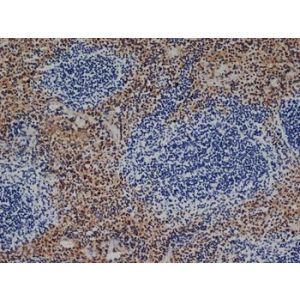
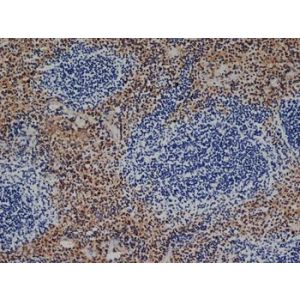
| Application Data | Application #1: Staining of J774 cells with Rat anti Mouse F4/80 antigen Biotin  Application #2: Frozen mouse spleen with Rat anti Mouse F4/80 antigen  Application #3: Staining of J774 cells with Rat anti Mouse F4/80 antigen:Biotin  Application #4: Staining of J774 cells with Rat anti Mouse F4/80 antigen:Low Endotoxin  Application #5: Staining of mouse J774 cells with Rat anti Mouse F4/80 antigen: RPE  |
| Protocol Information | Citation: 1: Rosas M, Thomas B, Stacey M, Gordon S, Taylor PR. The myeloid 7/4-antigen defines recently generated inflammatory macrophages and is synonymous with Ly-6B.J Leukoc Biol. 2010 Jul;88(1):169-80. Epub 2010 Apr 16. PubMed PMID: 20400676;PubMed Central PMCID: PMC2892525. Species: Mice Experiment Name: Reagent Flow Cytometric Analysis Experiment Background: The high expression on inflammatory cells is suggestive of a role in inflammation and makes the 7/4-antigen a potential target for the manipulation of inflammatory cells. Consistent with this, the 7/4-antibody mediates specific depletion of 7/4-expressing neutrophils and monocytes. Scientists identified the 7/4-antigen as a 25- to 30-kDa GPI-anchored glycoprotein synonymous with the Ly-6B.2 alloantigen. It was found that Ly-6B-expressing macrophages also express more MHCII, CIITA, CCR2, Ly-6C, and CD62L than the Ly-6B-negative macrophages. Ly-6B-expressing macrophages incorporate more BrdU than their Ly-6B-negative contemporaries when fed during the resolution phase of the acute inflammatory response. Thus, Ly-6B expression on mature macrophages defines a subset of recently generated inflammatory macrophages that retain monocytic markers and is hence a surrogate marker of macrophage turnover in inflammatory lesions. Experimental Steps: Balb/c, CBA, 129, and C57BL/6 mice and a Balb/c.7/4+ congenic mouse strain created by six generations of backcross of the C57BL/6 7/4+ phenotype onto the Balb/c background.The 7/4-antibody as well as biotin-labeled CD204/scavenger receptor A (clone 2F8) and CD11b (clone 5C6) were produced in laboratory. Anti-mouse IgG-PE, Gr-1-PE, CD93-PE, DX5-PE, CD200R-PE, CD11b-PerCP-Cy5.5, streptavidin-PerCP-Cy5.5, CD3-biotin, CD86-biotin, CD9-biotin, and MHCII-biotin (clone 2G9) were purchased from BD PharMingen. F4/80-APC, CD11c-biotin (clone NH18), Ly-6C-AlexaFluor®488, 7/4- AlexaFluor®647, and CD68-AlexaFluor®647 were from (UK). Ly-6A.2-FITC was from BioLegend and SK38.86 ascites fluid was taken as a gift. Percoll was obtained from Pharmacia and PI-PLC was obtained from Sigma.2. Cells (bone marrow-derived or stable cell lines) were incubated in blocking buffer. FITC-labeled antibodies (7/4, Ly-6A.2) and Gr-1-PE were added in a final volume of washing buffer and incubated. Cells incubated with FITC- or PE-labeled antibodies were washed thrice and resuspended.Cells incubated with SK38.86 were washed twice and anti-mouse-PE was added.Then cells were treated as those incubated with fluorescent antibodies. Analysis was performed using FlowJo or Summit. Blood from C57BL/6 mice was obtained by cardiac puncture with EDTA used as an anticoagulant. RBCs were lysed with ACK buffer and only leukocytes were used for staining with CD11b-PerCP-Cy5.5, F4/80-APC, 7/4-PE, and Ly-6C-FITC or DX5-PE and 7/4-Alexa647 and CD3-biotin with streptavidin-PerCP-Cy5.5. Data were acquired and analyzed. Other Reagents Used: Formaldehyde Number Of Protocols: 1 |
| Reference | 1. Austyn, J.M. and Gordon, S. (1981) F4/80 , a monoclonal antibody directed specifically against the mouse macrophage. Eur. J. Immunol. 11: 805-815. 2. Hume, D.A., Perry, V.H., and Gordon, S. (1984) The Mononuclear Phagocyte System of the Mouse defined by Immunohistochemical Localisation of Antigen F4/80: Macrophages Associated with Epithelia. The Anatomical Record 210: 503-512. 3. Lee, S.H. et al. (1985) Quantitative analysis of total macrophage content in adult mouse tissues. Immunochemical studies with monoclonal antibody F4/80. J. Exp. Med. 161: 475-489. 4. Gordon, S. et al. (1992) Antigen markers of macrophage differentiation in murine tissues. Curr. Top. Micro. Immunol. 181: 1-37. 5. Warschkau, H. and Kiderlen, A.F. (1999) A monoclonal antibody directed against the murine macrophage surface molecule F4/80 modulates natural immune response to Listeria monocytogenes. J. Immunol.163: 3409 -3416. 6. Lin, H. H.et al. (2005) The macrophage F4/80 receptor is required for the induction of antigen-specific efferent regulatory T cells in peripheral tolerance. J. Exp. Med. 201: 1615 -1625. 7. Chan, R.J. et al. (2005) Human somatic PTPN11 mutations induce hematopoietic cell hypersensitivity to granulocyte-macrophage colony stimulating factor Blood. 105: 3737-3742. 8. F. X. Pizza et al. (2005) Neutrophils contribute to muscle injury and impair its resolution after lengthening contractions in mice J. Physiol. 562:899-913. 9. Metwali, A. et al (2004) Cutting Edge: Hemokinin Has Substance P-Like Function and Expression in Inflammation The Journal of Immunology, 172: 6528-6532 10. Kathryn J Moore et al (2009) Divergent Responses to LPS and Bacteria in CD14-Deficient Murine Macrophages. The Journal of Immunology, 165: 4272-4280 |
|---|---|
| Gene Symbol | Emr1 |
| Alias Symbols | Emr, Ly7, Emr1, Ly71, TM7L, F4/80, DD7A5-, Gpf480, TM7LN3, DD7A5-7, EGF-TM7 |
| NCBI Gene Id | 13733 |
| Protein Name | EGF-like module-containing mucin-like hormone receptor-like 1 |
| Description of Target | RAT ANTI MOUSE F4/80 ANTIGEN:APC |
| Uniprot ID | Q61549 |
| Protein Accession # | NP_034260.1 |
| Protein Size (# AA) | 931 |