

Quimigen Portugal > AKT1 antibody - N-terminal region (AVARP06008_T100)
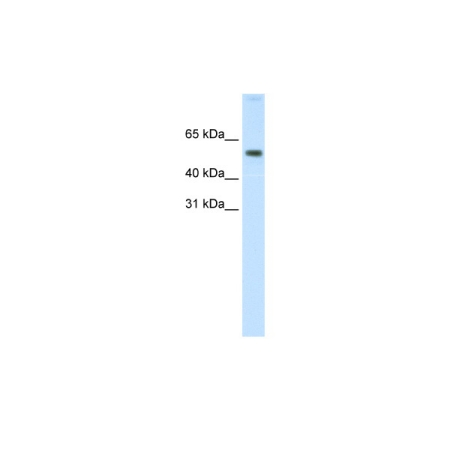
AKT1 antibody - N-terminal region (AVARP06008_T100)

Referência AVARP06008_T100
Tamanho : 100ul
Contactar o distribuidor local :
 Telefone : +1 850 650 7790
Marca : Aviva Systems Biology
Contactar o distribuidor local :
Telefone : +1 850 650 7790
AKT1 Antibody - N-terminal region (AVARP06008_T100)
| Datasheets/Manuals | Printable datasheet for anti-AKT1 (AVARP06008_T100) antibody |
|---|
| Tested Species Reactivity | Human |
|---|---|
| Predicted Species Reactivity | Human, Mouse, Rat, Cow, Dog, Goat, Pig, Sheep |
| Product Format | Liquid. Purified antibody supplied in 1x PBS buffer with 0.09% (w/v) sodium azide and 2% sucrose. |
| Clonality | Polyclonal |
| Host | Rabbit |
| Application | WB |
| Reconstitution and Storage | For short term use, store at 2-8C up to 1 week. For long term storage, store at -20C in small aliquots to prevent freeze-thaw cycles. |
| Immunogen | The immunogen is a synthetic peptide directed towards the N terminal region of human AKT1 |
| Purification | Protein A purified |
| Predicted Homology Based on Immunogen Sequence | Cow: 86%; Dog: 100%; Goat: 86%; Human: 100%; Mouse: 100%; Pig: 93%; Rat: 100%; Sheep: 86% |
| Peptide Sequence | Synthetic peptide located within the following region: RSGSPSDNSGAEEMEVSLAKPKHRVTMNEFEYLKLLGKGTFGKVILVKEK |
| Concentration | 1.0 mg/ml |
| Blocking Peptide | For anti-AKT1 (AVARP06008_T100) antibody is Catalog # AAP30466 (Previous Catalog # AAPP01102) |
| Reference | Jones, P.F., et al., (1991) Proc. Natl. Acad. Sci. U.S.A. 88: 4171-4175. |
|---|---|
| Gene Symbol | AKT1 |
| Gene Full Name | V-akt murine thymoma viral oncogene homolog 1 |
| Alias Symbols | AKT, PKB, RAC, PRKBA, PKB-ALPHA, RAC-ALPHA |
| NCBI Gene Id | 207 |
| Protein Name | RAC-alpha serine/threonine-protein kinase |
| Description of Target | AKT1 is a general protein kinase capable of phosphorylating several known proteins. |
| Uniprot ID | P31749 |
| Protein Accession # | NP_005154 |
| Nucleotide Accession # | NM_005163 |
| Protein Size (# AA) | 480 |
| Molecular Weight | 56kDa |
Protein interactions
| Name | # of Products |
|---|---|
| APOH | 80 |
| ARRB2 | 181 |
| ASXL1 | 24 |
| BPGM | 30 |
| CALM1 | 512 |
| CDC37 | 169 |
| COMMD1 | 108 |
| CREBBP | 802 |
| CTBP1 | 170 |
| DCTN1 | 149 |
| DNAJB1 | 70 |
| DNMT1 | 136 |
| EEF1G | 187 |
| EP300 | 986 |
| ERBB3 | 104 |
| ESR1 | 695 |
| FANCA | 156 |
| FKBP5 | 57 |
| GSK3A | 63 |
| GSK3B | 566 |
| HSP90AA1 | 525 |
| HSPA | 21 |
| IKBKB | 287 |
| IKBKG | 419 |
| MDM2 | 445 |
| MTOR | 162 |
| MXD1 | 97 |
| NCOA4 | 35 |
| NOTCH1 | 124 |
| PA2G4 | 70 |
| PHLPP1 | 41 |
| PI4K2B | 42 |
| PPL | 40 |
| PPP2CA | 290 |
| PPP3CA | 116 |
| PTEN | 158 |
| SETDB1 | 252 |
| SKP2 | 188 |
| STUB1 | 399 |
| TRIM13 | 30 |
| TTC3 | 32 |
| UBC | 7030 |
| ZHX1 | 144 |
Biological pathways
| Name | # of Products |
|---|---|
| Activation of pro-apoptotic gene products | 157 |
| Activation-induced cell death of T cells | 27 |
| Anti-apoptosis | 727 |
| Carbohydrate transport | 55 |
| Cell proliferation | 731 |
| Endocrine pancreas development | 246 |
| Fibroblast growth factor receptor signaling pathway | 279 |
| Glucose metabolic process | 196 |
| Glycogen biosynthetic process | 41 |
| G-protein coupled receptor signaling pathway | 315 |
| Induction of apoptosis by intracellular signals | 137 |
| Insulin receptor signaling pathway | 491 |
| Insulin-like growth factor receptor signaling pathway | 50 |
| Mammary gland epithelial cell differentiation | 40 |
| MRNA metabolic process | 273 |
| Negative regulation of cysteine-type endopeptidase activity involved in apoptotic process | 80 |
| Negative regulation of fatty acid beta-oxidation | 21 |
| Negative regulation of plasma membrane long-chain fatty acid transport | 30 |
| Negative regulation of protein kinase activity | 216 |
| Negative regulation of release of cytochrome c from mitochondria | 53 |
| Nerve growth factor receptor signaling pathway | 602 |
| Nitric oxide biosynthetic process | 67 |
| Peptidyl-serine phosphorylation | 97 |
| Phosphatidylinositol-mediated signaling | 285 |
| Platelet activation | 875 |
| Positive regulation of anti-apoptosis | 118 |
| Positive regulation of blood vessel endothelial cell migration | 76 |
| Positive regulation of cell growth | 178 |
| Positive regulation of cyclin-dependent protein kinase activity involved in G1/S | 70 |
| Positive regulation of establishment of protein localization in plasma membrane | 55 |
| Positive regulation of fat cell differentiation | 49 |
| Positive regulation of glucose import | 149 |
| Positive regulation of glycogen biosynthetic process | 109 |
| Positive regulation of lipid biosynthetic process | 61 |
| Positive regulation of nitric oxide biosynthetic process | 220 |
| Positive regulation of nitric-oxide synthase activity | 101 |
| Positive regulation of peptidyl-serine phosphorylation | 168 |
| Positive regulation of sequence-specific DNA binding transcription factor activity | 174 |
| Protein autophosphorylation | 356 |
| Protein import into nucleus, translocation | 102 |
| Regulation of G1/S transition checkpoint | 21 |
| Regulation of neuron projection development | 28 |
| Regulation of translation | 122 |
| Response to fluid shear stress | 39 |
| Response to heat | 90 |
| Response to UV-A | 66 |
| T cell costimulation | 425 |
Biological process
| Name | # of Products |
|---|---|
| Activation of pro-apoptotic gene products | 31 |
| Activation-induced cell death of T cells | 9 |
| Anti-apoptosis | 239 |
| Apoptotic process | 586 |
| Blood coagulation | 396 |
| Carbohydrate metabolic process | 247 |
| Carbohydrate transport | 36 |
| Cell differentiation | 490 |
| Cell proliferation | 293 |
| Cellular response to insulin stimulus | 69 |
| Endocrine pancreas development | 50 |
| Epidermal growth factor receptor signaling pathway | 124 |
| Fibroblast growth factor receptor signaling pathway | 137 |
| Gene expression | 503 |
| G-protein coupled receptor signaling pathway | 262 |
| Induction of apoptosis by intracellular signals | 47 |
| Insulin receptor signaling pathway | 146 |
| Insulin-like growth factor receptor signaling pathway | 20 |
| Intracellular signal transduction | 200 |
| Mammary gland epithelial cell differentiation | 18 |
| MRNA metabolic process | 178 |
| Multicellular organismal development | 896 |
| Negative regulation of apoptotic process | 356 |
| Negative regulation of cysteine-type endopeptidase activity involved in apoptotic process | 66 |
| Negative regulation of fatty acid beta-oxidation | 3 |
| Negative regulation of plasma membrane long-chain fatty acid transport | 4 |
| Negative regulation of protein kinase activity | 53 |
| Negative regulation of release of cytochrome c from mitochondria | 17 |
| Nerve growth factor receptor signaling pathway | 173 |
| Nervous system development | 384 |
| Nitric oxide biosynthetic process | 16 |
| Nitric oxide metabolic process | 16 |
| Peptidyl-serine phosphorylation | 61 |
| Phosphatidylinositol-mediated signaling | 74 |
| Phosphorylation | 101 |
| Platelet activation | 202 |
| Positive regulation of anti-apoptosis | 53 |
| Positive regulation of blood vessel endothelial cell migration | 24 |
| Positive regulation of cell growth | 70 |
| Positive regulation of cellular protein metabolic process | 20 |
| Positive regulation of cyclin-dependent protein kinase activity involved in G1/S | 6 |
| Positive regulation of establishment of protein localization in plasma membrane | 13 |
| Positive regulation of fat cell differentiation | 22 |
| Positive regulation of glucose import | 34 |
| Positive regulation of glucose metabolic process | 7 |
| Positive regulation of glycogen biosynthetic process | 23 |
| Positive regulation of lipid biosynthetic process | 8 |
| Positive regulation of nitric oxide biosynthetic process | 53 |
| Positive regulation of nitric-oxide synthase activity | 14 |
| Positive regulation of peptidyl-serine phosphorylation | 63 |
| Positive regulation of protein phosphorylation | 125 |
| Positive regulation of sequence-specific DNA binding transcription factor activity | 92 |
| Protein autophosphorylation | 150 |
| Protein import into nucleus, translocation | 32 |
| Protein modification process | 109 |
| Protein phosphorylation | 451 |
| Regulation of cell migration | 52 |
| Regulation of G1/S transition checkpoint | 1 |
| Regulation of glycogen biosynthetic process | 5 |
| Regulation of neuron projection development | 6 |
| Regulation of nitric-oxide synthase activity | 16 |
| Regulation of translation | 80 |
| Response to fluid shear stress | 7 |
| Response to heat | 69 |
| Response to UV-A | 5 |
| RNA metabolic process | 206 |
| Signal transduction | 1058 |
| Small molecule metabolic process | 825 |
| T cell costimulation | 87 |
| Transport | 555 |
Cellular components
| Name | # of Products |
|---|---|
| Cytoplasm | 4549 |
| Cytosol | 1868 |
| Membrane fraction | 437 |
| Microtubule cytoskeleton | 77 |
| Nucleoplasm | 775 |
| Nucleus | 4914 |
| Plasma membrane | 2678 |
Protein function
| Name | # of Products |
|---|---|
| ATP binding | 2814 |
| Enzyme binding | 898 |
| Identical protein binding | 1130 |
| Kinase activity | 353 |
| Nitric-oxide synthase regulator activity | 79 |
| Nucleotide binding | 3928 |
| Phosphatidylinositol-3,4,5-trisphosphate binding | 44 |
| Phosphatidylinositol-3,4-bisphosphate binding | 36 |
| Protein binding | 12191 |
| Protein kinase activity | 636 |
| Protein serine/threonine kinase activity | 738 |
Diseases
| Name | # of Products |
|---|---|
| Disease mutation | 5332 |
| Proto-oncogene | 793 |
-
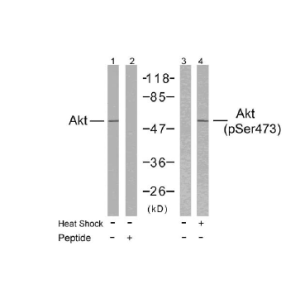 Akt Antibody (Phospho-Ser473) (OAEC00053)Catalog #: OAEC00053Application: WB, IHCFormat: Liquid. PBS (without Mg2+ and Ca2+), pH 7.4, 150mM NaCl, 0.02% sodium azide and 50% glycerol.Size: 50ug
 -
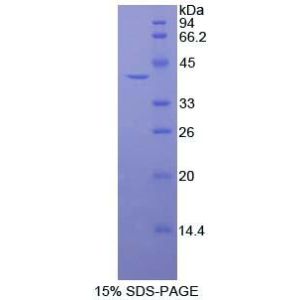 AKT1 Recombinant Protein (OPCD06207)Catalog #: OPCD06207Conjugation: UnconjugatedApplication: Ctrl (+), SDS-PAGE, WBFormat: Freeze-dried Powder. PBS, pH7.4, containing 0.01% SKL, 5% Trehalose.